DOWNLOAD THE BOOK: Showrunning for Social Impact Entertainment
Thought Leadership


This November, Population Media Center (PMC) stepped into the global spotlight at the International Conference on Family Planning (ICFP2025), joining thousands of innovators, practitioners, and champions working to advance sexual and reproductive health and rights around the world.
With more than 95% of PMC’s programming focused on family planning, sexual and reproductive health, and gender equity, the conference offered the perfect space to amplify our impact, share breakthrough results, connect with colleagues, and spark collaborations with new and existing partners across every corner of the sector.
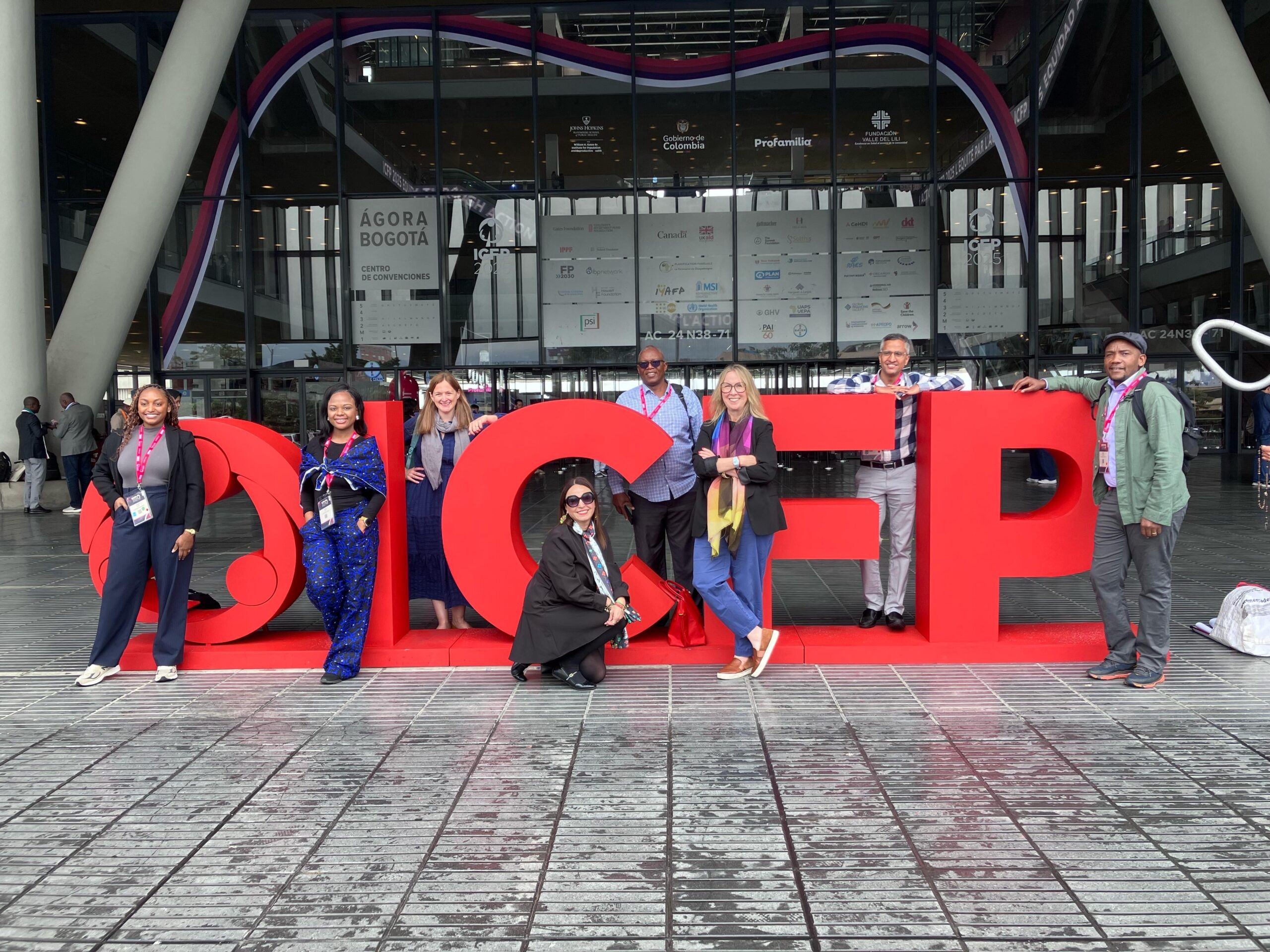
ICFP is one of the world’s most influential gatherings for family planning and reproductive health. The conference brings together researchers, youth advocates, NGOs, creative storytellers, country leaders, and funders to explore what’s working, what’s next, and how to accelerate access for all.
The ICFP 2025 theme, “Equity Through Action: Advancing Sexual and Reproductive Health and Rights for All,” reflects the urgency of addressing systemic inequities through innovative solutions and concrete commitments.
For PMC, this meant our mission fit right into the heartbeat of the event and created an incredible opportunity to continue to connect with a wide array of organizations about how entertainment and storytelling fits into the ecosystem of family planning. With contraception under attack, the investment in correct information that influences hearts and minds has never been more important.
Participants of the event have access to a wide range of sessions—from plenaries, panel discussions, and debates to workshops, side events, and networking opportunities—all designed to spark dialogue, strengthen partnerships, and inspire action.
Throughout the week, PMC connected with attendees through immersive booth activities, breakout conversations, and lively exchanges that showcased how powerful storytelling can drive real social change.
Our booth became a gathering place for anyone curious about the intersection of entertainment and impact. Attendees explored:
Rajan Parajuli, Country Director for PMC-Nepal, and Charles Kalonga, Country Director for PMC-Zambia, led engaging sessions connected to their most recent projects, sharing powerful insights and spotlighting the transformative work unfolding across their respective countries.
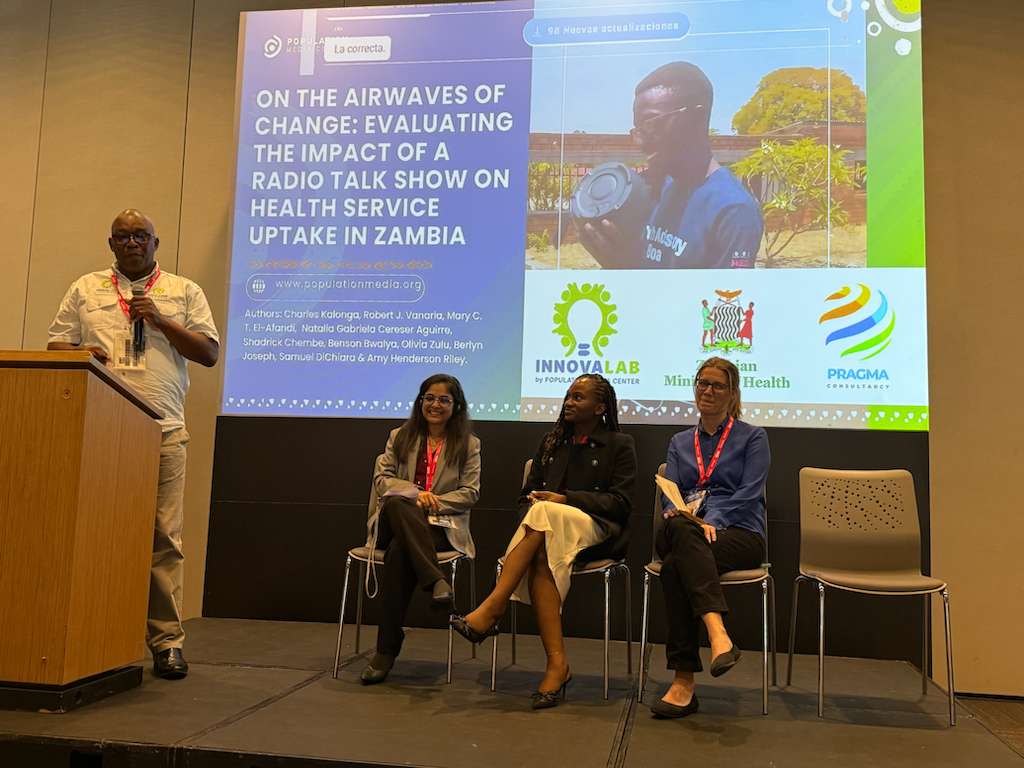
In his session, Kalonga unpacked the urgent health and social realities shaping communities across Zambia and how storytelling has become one of the country’s most powerful tools for shifting norms. Drawing on recent Innovalab pilots across the Copperbelt region, he illustrated how PMC-Zambia is using creative, community-rooted formats to meet people where they are emphasizing our live call-in radio show that opened space for honest dialogue about HIV and family planning.
Kalonga emphasized that in a landscape where misinformation and stigma often stand in the way of action, trusted voices, relatable characters, and locally resonant storytelling are moving people from awareness to behavior change. He highlighted not only the measurable gains from increased PrEP knowledge to higher awareness of One-Stop Centers, but also the emotional and cultural shifts emerging in classrooms, markets, and homes. For Charles, the message was clear: when communities see themselves in the story, they begin to change its ending.
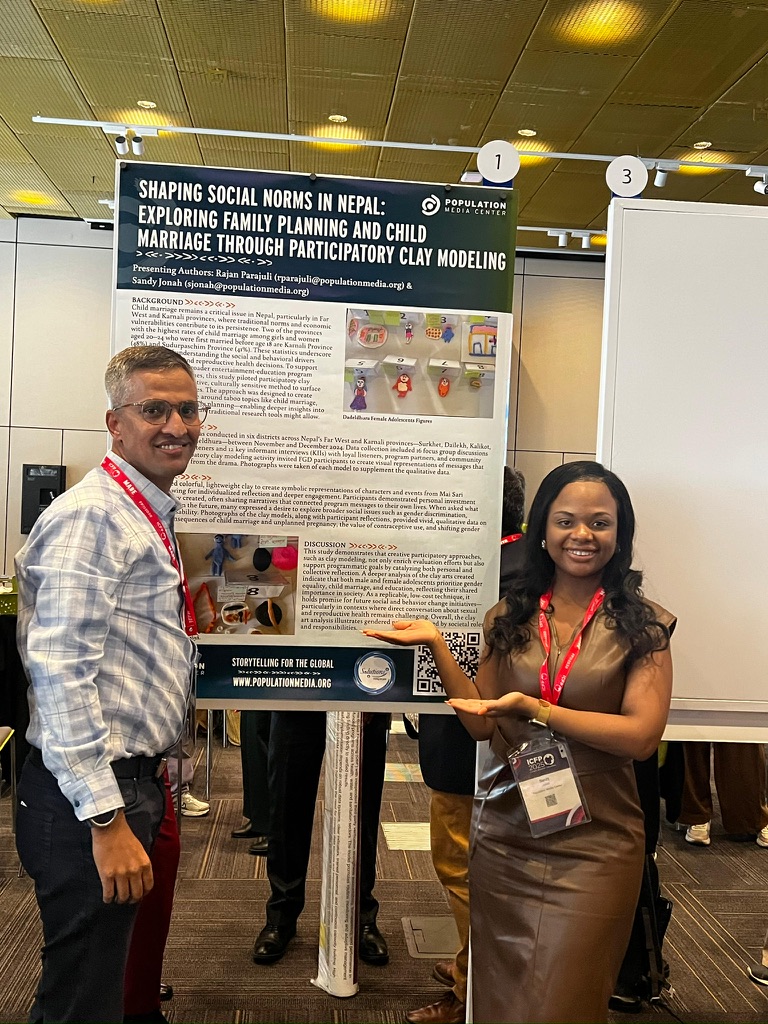
In his session, Rajan Parajuli, Country Director for PMC-Nepal, explored how storytelling continues to evolve as a transformative force across Nepal’s Far West and Karnali provinces. He shared insights from the recent rebroadcast of Mai Sari Sunakhari (“Orchid Like Me”), PMC-Nepal’s landmark radio drama, and how the team reimagined its impact through new, deeply participatory forms of engagement. Rajan highlighted how shadow plays, short-form spin-off episodes, listening clubs, and digital storytelling have helped inspire critical conversations around child marriage, girls’ education, reproductive health, and gender norms. But the most powerful part of his presentation centered on the project’s innovative clay-art evaluation, a method that allowed listeners to translate their emotional responses, cultural reflections, and personal revelations into sculpted forms.
Through clay figures symbolizing loss, resilience, independence, and community protection, Rajan illustrated how audiences were not just absorbing messages, they were processing them, personalizing them, and reimagining their futures in tactile, expressive ways. He emphasized that this hybrid model of radio, digital media, and participatory art has opened new pathways for understanding social norms, especially among women, adolescent girls, and participants who are often hesitant to speak openly. What emerged from these sessions, Rajan shared, was a clear shift: reduced acceptance of child marriage, greater support for girls’ education, and stronger engagement from men in challenging harmful traditions.
During our time at ICFP, we gained valuable insights into the industry landscape to take with us. One point that was made unmistakably clear is that youth are no longer asking to be included, they are claiming their place as co-creators, leaders, and storytellers. Across panels and workshops, attendees highlighted the urgency of engaging young people throughout the full lifecycle of programs, from design and documentation to interviews, monitoring and evaluation, and implementation. This shift reflects a broader movement toward inclusive narrative power, where communities, especially girls, young leaders, and Indigenous voices, shape the stories that influence norms, behavior, and impact.
Another dominant theme was the recognition of storytelling as a core technical tool for SRHR and social norms change. Creative media, youth-led content, and culturally grounded narratives were embraced as essential strategies, not add-ons. Participants repeatedly underscored the influence of digital platforms, influencers, and hybrid analogue-digital strategies in reaching audiences where they already are. Alongside this, attendees emphasized that durable impact requires engaging men, faith leaders, and families, integrating communication deeply into service delivery systems, and designing programs with measurable equity at the center.
Across the conference, there was a shared call for boldness. Donors and implementers alike urged the field to move beyond short-term projects toward long-term, scalable program brands rooted in lived experiences and community insights. Whether addressing misinformation or restrictive social norms, attendees left with a renewed commitment to collective action, visibility, and narrative change.


For more than 25 years, PMC has harnessed the power of entertainment through long-running dramas, character arcs, relatable storylines, and community-driven content, to shift norms, dismantle barriers, and expand access to reproductive health information.
Family planning remains central to our global mission. As we look ahead, PMC is energized by the partnerships sparked at ICFP2025 and committed to building even more innovative, culturally resonant storytelling that helps people make informed, empowered choices.

